Strict App Blocker

An app blocker with
no way out.

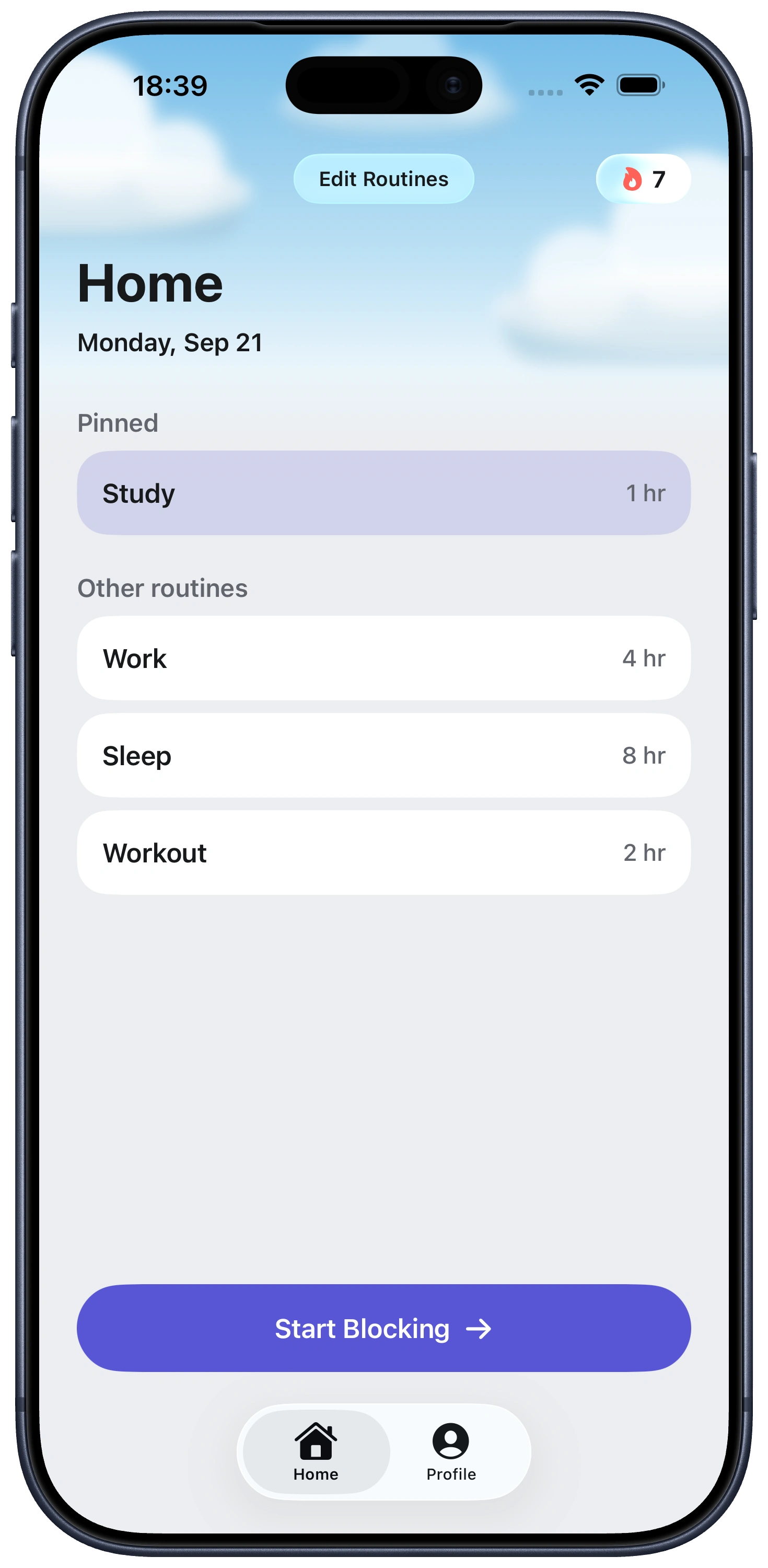
A strict app blocker for iPhone has no easy override: no pause button, no "ignore for today," no toggle to switch off mid-scroll. Fella blocks selected apps by default and gives one 5-minute emergency unlock a day, then locks itself back up automatically.

Most app blockers are strict on paper and soft in practice. They ship with a "strict mode," but that mode is usually just another setting living next to an off switch. The moment you're tempted, you're one tap away from turning strictness off, and that tap is exactly the moment willpower is weakest.

A genuinely strict app blocker removes that tap. Not by making the app harder to use, but by not giving you a control to reach for in the first place. If there's no toggle, there's nothing to negotiate with yourself over.

Fella is built around that single idea. Pick the apps that pull you in once, keep them blocked by default every day, and get exactly one 5-minute emergency unlock if something real comes up. No modes, no settings to loosen, no daily decision.

What actually makes an app blocker "strict"

Strictness is about what you can't reach, not what you can turn on. A blocker is strict when there's no convenient way to undo the block once it's active, regardless of how the app markets itself.

The tell is the override, not the feature list. Look for a pause button, a "snooze," an "ignore for today," or a settings screen you can freely edit mid-session. If any of those exist without friction, the block is a suggestion, not a rule.

Real strictness usually comes from one of three places: the override is removed entirely, the override is locked behind a timer you can't shorten, or the override requires something you don't control in the moment, like a second person's passcode or a physical object that isn't in your pocket.

Why Screen Time's limits aren't strict by default

Screen Time app limits ship with a built-in exit. When you hit a limit, iOS shows an "Ignore Limit" option that clears it for 15 minutes or for the rest of the day, and getting past it just takes one tap plus your own Screen Time passcode.

The "Block At Time Limit" toggle helps, with a catch. Turning it on removes the Ignore Limit button from the prompt, but it's a real barrier only when someone else holds the passcode, like a parent managing a child's device. On your own phone, you already know the code you set, so the "lock" opens with a code you wrote yourself.

That's the core problem with using Screen Time alone as a self-control tool: it was built for external accountability between a parent and a child's device, not for stopping yourself from overriding your own settings.

Blocker Strict feature Where it can still slip
Apple Screen Time Block At Time Limit Needs a passcode you don't already know to actually hold.
AppBlock Strict Mode / Timer Condition Strict Mode itself is a setting you choose to turn on, and off, each time.
One Sec Strict Block Removes "ignore for today," but is opt-in per session.
Freedom Locked Mode Only as strict as the schedule you set before starting.
Opal Focus Sessions Session length and rules are still yours to configure.
Fella Blocked by default, every day, no mode to pick. Built for one daily 5-minute unlock, not open-ended access.

How Fella stays strict without extra modes

There's no strict mode to turn on, because there's no soft mode to turn it on from. You choose your blocked apps once during setup, and that's the only settings decision Fella asks you to make.

One unlock, every day, no more. You get a single 5-minute emergency unlock in a 24-hour period. There's no "one more minute," no second unlock for a good reason, and no way to save unused time for later.

The re-lock is automatic. When the 5 minutes end, Fella locks the app again on its own. You don't have to remember to close the door, and there's no toggle sitting open in the background waiting to be found.

Who actually needs a strict app blocker

People who've already tried soft limits. If "Ignore Limit" or a snooze button has become part of your routine, the fix isn't a stricter reminder, it's removing the button.

People blocking one or two specific habits. A strict blocker works best aimed at the exact apps that cause the automatic checking, like social feeds, short video, or a specific game, not your entire phone.

People who still need occasional access. Strict doesn't have to mean unreachable. The goal is removing the daily negotiation, not cutting off real, occasional needs like a DM or a time-sensitive message.

Strict app blocker FAQ

The strictest app blockers remove the manual override entirely, or lock it behind a timer, a second person's passcode, or a hard-to-repeat action. Fella does this by giving no daily toggle at all: selected apps stay blocked by default, with one 5-minute emergency unlock per day.

Yes. When a Screen Time app limit is reached, iOS shows an Ignore Limit option that removes the limit for 15 minutes or for the rest of the day, usually with one tap and your own passcode.

Block At Time Limit removes the Ignore Limit button from the app limit screen. It only works as a real barrier on child accounts where a parent holds the separate Screen Time passcode, since on your own device you already know the code.

No software blocker on iOS is physically impossible to remove, since iOS lets you delete any third-party app. What you can get is a blocker with no convenient override: no pause button, no extra unlock, and no settings you can quietly loosen in the moment.

Strict blockers work by removing the moment-to-moment decision, not by relying on willpower. Research on screen-time interventions has found meaningful drops in usage when the override is hard to reach, compared to soft limits that can be dismissed in a tap.

A normal app blocker usually has a snooze, a pause, or a settings toggle you can switch off whenever you want. A strict app blocker removes that option, so the block holds even on the days your motivation is low.

With Fella, yes. Strict does not mean unreachable. You get one 5-minute emergency unlock per day for anything genuinely urgent, and the blocked apps lock themselves again automatically when it ends.