No Bypass

No app blocker is
unbeatable. Some are close.

iOS lets you delete any app, disable any permission, and reset your whole device, so nothing is truly unbypassable. What actually matters is how many of those exits are one convenient tap away, and how many take real, deliberate effort.

An honest answer first: no software app blocker on iPhone is 100% unbypassable. Every third-party blocker, including Fella, runs on top of Apple's own Screen Time and Family Controls frameworks. Apple designed those frameworks so the device owner can always reach the underlying settings.

That doesn't make every blocker equally easy to escape. The real question is not "can this be bypassed," it's "how many steps does it take, and how tempted will I actually be to take them." A blocker with a button labeled "unlock" three taps away is a very different product from one that requires deleting the app and explaining why to someone else.

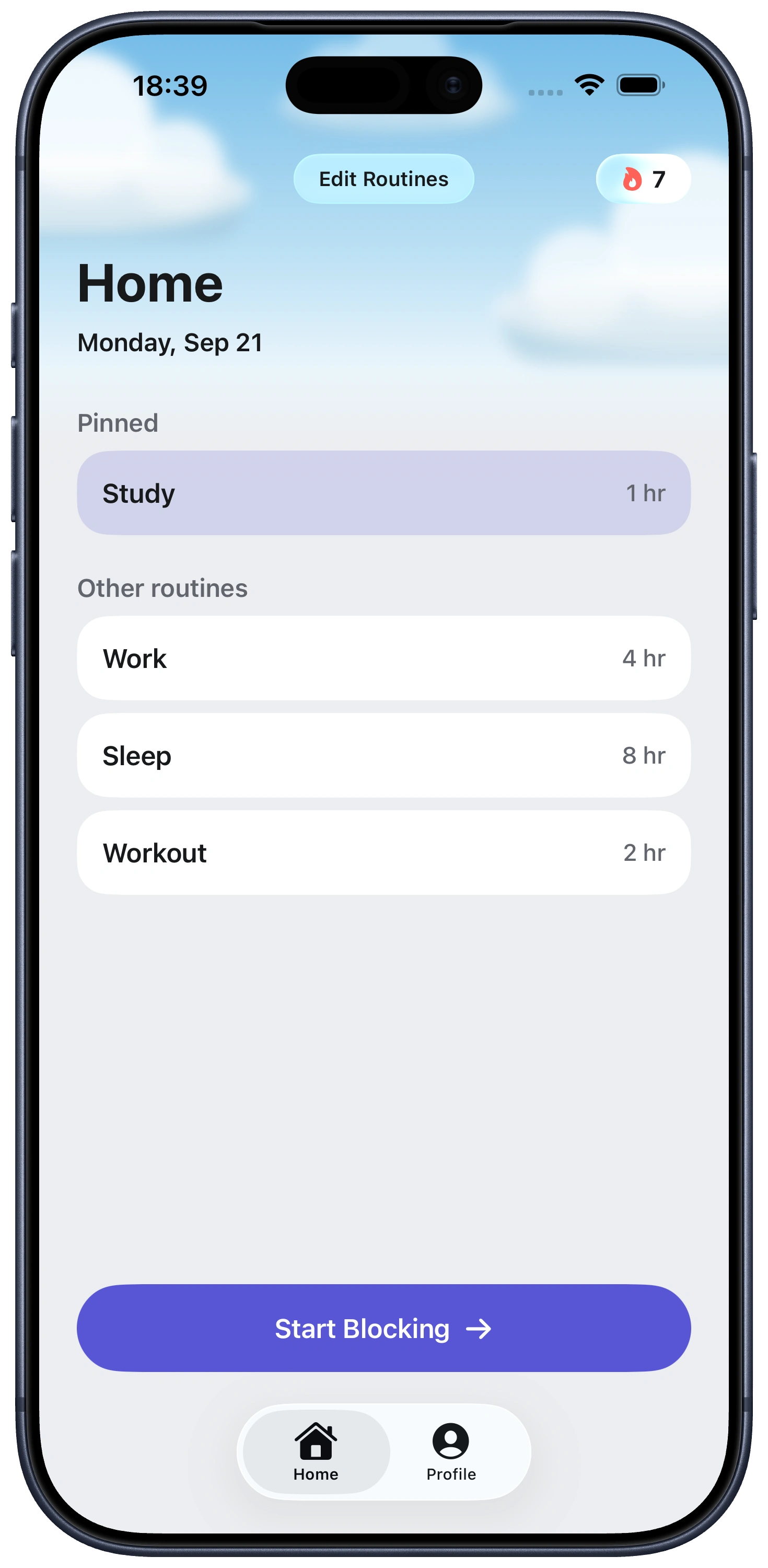
Fella's approach is to remove the tap, not pretend the Settings app doesn't exist. There is no in-app override, snooze, or pause button. Getting around Fella means leaving the experience entirely, not tapping something Fella put in front of you.

Every real way people bypass an iPhone app blocker

Turning off Screen Time access. Most app blockers depend on the "Apps with Screen Time Access" permission in Settings. Switching it off disables the blocker's ability to enforce anything, and until recently this only required Face ID or your device passcode.

Deleting the app. iOS always lets you uninstall a third-party app, including the blocker itself. Once it's gone, whatever it was enforcing goes with it.

Using a browser instead of the app. Blocking the Instagram or X app doesn't block instagram.com or x.com in Safari unless the blocker also covers the browser, which many setups miss.

Signing out of your Apple ID and back in. Some Screen Time configurations get reset or re-evaluated when the Apple ID session changes, which can quietly clear restrictions.

Force restarting the device. A restart doesn't remove Screen Time restrictions by design, but it can occasionally surface bugs after an iOS update where limits stop being enforced until re-applied.

Erasing all content and settings. A factory reset wipes the Screen Time passcode along with everything else. It's drastic, but it is a genuine, always-available exit.

Using a second device. Blocking an app on your iPhone does nothing to a browser tab open on a laptop or a tablet that isn't covered by the same restrictions.

Bypass method Still works? What actually closes it
Toggle off Screen Time access Harder since iOS 26.4 Now requires the Screen Time passcode, not Face ID or device passcode.
Delete the blocker app Still works Only a Screen Time passcode you don't personally know.
Open the site in a browser Depends on setup Blocking Safari access to the same domains, not just the app.
Sign out of Apple ID Sometimes No universal fix; largely a configuration gap in the blocker.
Factory reset the device Still works Nothing software-based. Only a genuinely external barrier, like an accountability partner or a hardware key.

What iOS 26.4 changed, and what still doesn't have a fix

Apple closed the fastest exit. Before iOS 26.4, disabling any Screen Time-based blocker's core permission took one Face ID scan. Now that same toggle is gated behind the separate Screen Time passcode, which meaningfully raises the bar for anyone using Face ID or a device passcode they already know by heart.

What still has no software fix: uninstalling, resetting, and multi-device gaps. Deleting the app, factory-resetting the phone, or simply using an unblocked laptop remain open. Closing these requires something outside the software entirely, most commonly a Screen Time passcode held by someone else, an approval-based accountability partner, or a hardware key like an NFC tag that has to be physically present.

Where Fella fits into this

Fella runs on the same Screen Time frameworks as everything else in this list. That means the OS-level exits above technically apply to Fella too, and Fella doesn't claim otherwise.

What Fella removes is the everyday, in-app exit. There's no pause button, no snooze, no "ignore for today" living inside the app. The only access is one 5-minute emergency unlock per day, and it locks itself back up automatically when that time ends.

The gap that matters most in practice isn't the factory reset scenario. It's the 50 times a week you almost open a blocked app on impulse. Removing a convenient in-app override closes nearly all of those moments, even though it can't remove the Settings app from your phone.

App blocker bypass FAQ

Yes, in most cases. Almost every iPhone app blocker runs on top of Apple's Screen Time and Family Controls frameworks, and iOS itself always allows a user to open Settings, disable permissions, delete the app, or reset the device. No third-party app can override that.

It can. Most app blockers rely on the "Apps with Screen Time Access" permission, and disabling it disables the blocker's ability to enforce blocks. As of iOS 26.4, Apple gates this toggle behind the separate Screen Time passcode instead of Face ID or the device passcode, which closes the fastest version of this bypass.

Yes, deleting the blocker app itself removes its ability to enforce anything, since iOS lets you uninstall any third-party app. The only way to prevent this is a Screen Time passcode that you don't personally know, such as one held by a parent or an accountability partner.

A restart alone does not remove Screen Time-based blocks, since the restrictions are tied to your Screen Time settings and Apple ID, not to the app running in the background. Blocks can occasionally misbehave after an iOS update, which is a bug rather than a bypass method.

iOS 26.4 changed the "Apps with Screen Time Access" toggle so that disabling it requires the Screen Time passcode instead of Face ID or the regular device passcode. This closes the previous one-tap method of disabling any Screen Time-based blocker using just your face or thumb.

Not in absolute software terms. The closest options are a Screen Time passcode held by someone else, an accountability-partner approval system, or a hardware-based blocker like an NFC tag or card that has to be physically present to unlock.

Fella runs on Apple's Screen Time frameworks like other iOS blockers, so the same OS-level exits exist in theory. What Fella removes is the convenient, in-app override: there is no pause, snooze, or "ignore for today" button inside the experience itself, only one 5-minute emergency unlock per day.