Best iPhone App Blocker

The best blocker
depends on the failure point.

Do not choose an app blocker by feature count. Choose it by what keeps failing: awareness, soft pauses, schedules, cross-device focus, or the need to keep distracting apps blocked by default.

The best iPhone app blocker is the one that removes your actual loophole. If you only need awareness, Apple's Screen Time may be enough. If you need a pause, one sec may fit. If you want focus sessions and analytics, Opal may fit. If you need cross-device blocking, Freedom may fit. If you need selected apps blocked by default with one short emergency unlock, Fella is built for that narrower job.

Feature count is the wrong first filter. More dashboards, schedules, streaks, modes, or settings can help some users. They can also create more places to negotiate when the app habit is strongest.

Start with the moment that breaks. Do you ignore limits, bypass pauses, forget to start sessions, keep changing settings, or need the app sometimes without wanting it open all day? That answer matters more than a generic top-10 list.

Your problem Best-fit type Why
You need basic limits Apple Screen Time Built in, broad, free, good for awareness.
You need a pause before opening Mindful interruption app Adds friction before the app opens.
You want schedules and analytics Session-based blocker Useful for planned focus windows.
You keep bypassing everything Default-blocked app blocker Removes the repeated decision.

How to choose the best blocker

Choose Screen Time if you want the Apple control panel. Apple's Screen Time includes App Limits, Downtime, allowed apps, communication controls, reporting, and restrictions. It is the obvious first stop if you want broad settings and no extra app.

Choose a pause tool if awareness is still enough. Tools like one sec focus on interrupting the automatic open. That can work when a delay or reflection moment is enough to change your mind.

Choose a session blocker if your distraction is scheduled. Tools like Opal and Freedom are stronger fits when you want focus sessions, schedules, cross-device blocking, or deeper configuration.

Choose Fella if the problem is open access. Fella is for the user who already knows the problem apps and wants them blocked by default, with one emergency 5-minute unlock per day.

The criteria that actually matter

Default state. Is the app blocked by default, or does blocking only happen after a session, schedule, timer, reminder, or manual start? Automatic habits need a default that is already in place.

Bypass design. Every blocker has an escape hatch. The important question is whether the bypass is scarce, delayed, passcode-protected, session-based, unlimited, or easy to rationalize.

Emergency access. A strict blocker still needs an answer for real life. Messages, codes, links, travel plans, group updates, and account checks happen. The best system gives access without reopening the whole habit loop.

Setup weight. If the setup requires constant tuning, the settings can become the new loophole. A good blocker should fit the user's tolerance for configuration.

Option Best for Weak point
Screen Time Built-in limits, Downtime, reports, broad iPhone controls. Can become easy to ignore or reconfigure.
one sec Interrupting app opens with a pause or reflection moment. The final choice can still land on you.
Opal Focus sessions, schedules, analytics, and a larger system. More moving parts if you want a simple rule.
Freedom Cross-device focus sessions across desktop, browser, and mobile. Session setup can be too broad for one iPhone habit.
Fella Selected apps blocked by default with one emergency unlock. Not built for analytics, many schedules, or cross-device blocking.

The main iPhone blocker types

Screen Time is the baseline. It is free, built in, and broad. It is best when you want Apple's native settings rather than a specialized product.

Pause tools are for the first tap. They help when the habit is still interruptible. If a breath, prompt, or reflection question is enough, a hard blocker may be more than you need.

Session blockers are for planned focus. They shine when you want to block apps during work, school, study, writing, sleep, or other scheduled windows.

Default blockers are for reflexes. If the bad moment is fast, unplanned, and repetitive, the stronger pattern is simple: the app is already blocked.

Where Fella fits

Fella is not trying to be the biggest app blocker. It is trying to be the clearest one for a specific iPhone problem: selected distracting apps should not be available all day.

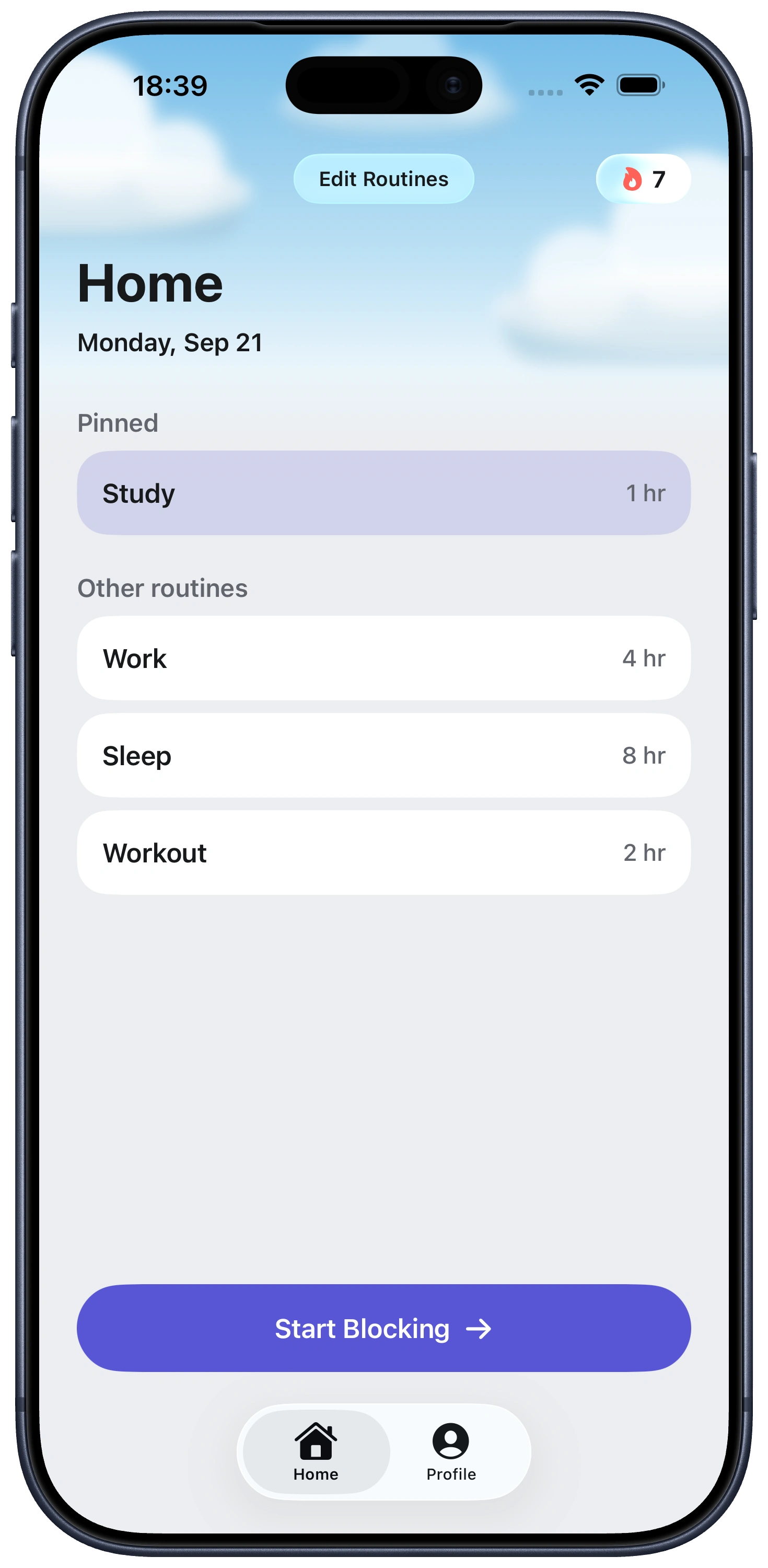
The daily rule is intentionally narrow. Pick the apps, keep them blocked, use one emergency 5-minute unlock if something real comes up, then let Fella lock them again automatically.

That makes Fella best for controlled access. It fits people who cannot simply delete apps because they still need messages, accounts, groups, videos, matches, subscriptions, or game progress sometimes.

What kind of apps should a blocker handle?

Social and short video. The obvious targets are Instagram, TikTok, YouTube, Snapchat, Reddit, and X.

Messaging and community apps. Apps like WhatsApp, Discord, and Threads can be useful and distracting in the same session.

Dating, games, and entertainment. The same pattern shows up in Tinder, Hinge, Netflix, Clash of Clans, and Candy Crush. A good blocker should follow the habit, not just the category label.

Who should choose Fella

Choose Fella if you keep opening the same apps automatically. If the app opens before you have time to think, soft reminders may not be enough.

Choose Fella if you need apps sometimes. If deletion is too blunt, read how to block apps on iPhone without deleting them. Controlled access is the point.

Choose Fella if Screen Time limits became another button. If you keep tapping through limits, read how to stop ignoring Screen Time limits. The answer may be fewer choices, not better reminders.

Best iPhone app blocker FAQ

The best iPhone app blocker depends on the failure point. Use Screen Time for built-in limits, one sec for mindful interruption, Opal for sessions and analytics, Freedom for cross-device blocking, and Fella when you want selected distracting apps blocked by default with one emergency 5-minute unlock per day.

Screen Time can be enough for awareness, basic limits, Downtime, allowed apps, and family controls. It is weaker when you keep ignoring limits or want a focused selected-app blocker.

Look at default state, bypass design, emergency access, setup complexity, and whether the blocker fits the apps you actually open automatically.

A hard blocker is better when you keep choosing the app anyway. A pause app is better when a short interruption is enough to change your decision.

Fella is best for iPhone users who already know which apps are the problem, still need those apps sometimes, and want them blocked by default with one emergency 5-minute unlock per day.

Fella is not the best fit if you want detailed analytics, many schedules, cross-device desktop blocking, parental monitoring, or a gentle mindfulness pause instead of selected apps being unavailable.