For Students

Built for the hours
you need to focus.

One extra hour of daily phone use is linked to roughly 0.15 fewer GPA points. Fella blocks the apps that eat study time by default, with one 5-minute emergency unlock if something real comes up.

The research on this is more consistent than most study advice. Studies tracking phone use and GPA have found roughly 0.15 fewer GPA points per additional hour of daily phone use, students who avoided phones during class taking about 62 percent more notes, and phone-related distractions surfacing every three to four minutes in a typical class session.

The pattern holds whether it's a lecture, a library session, or a night of homework. It's not really about any one app. It's about how often attention gets pulled away and how long it takes to come back.

Schools are already moving this direction

Phone-free classrooms went from a fringe idea to policy fast. By late 2025, most U.S. states had signed or enacted some form of phone-free school policy. California's Phone-Free Schools Act takes effect July 1, 2026. New York restricted smartphone use statewide for the 2025-2026 school year. Michigan's HB 4141 bans phone use during class starting the 2026-27 school year, and Massachusetts requires phone-free policies districtwide by fall 2026.

The logic behind these laws is the same logic behind blocking your own apps. A school isn't trying to ban phones forever, just during the specific hours attention actually needs to be somewhere else. Applying that same narrow rule to your own study time works the same way.

Why one notification costs more than one notification

A quick check is rarely just a quick check. Research on task switching estimates it takes over 23 minutes on average to fully regain deep focus after an interruption. A 10-second glance at a notification can cost most of the next half hour of actual studying.

Personal notifications are the hardest to ignore. Stimuli that feel personally relevant, like a message or a like, are especially likely to grab attention involuntarily, which is exactly what makes "I'll just look for one second" so unreliable as a plan.

Tool Best for Watch out for
Fella Apps blocked all day, every day, not just during sessions Built for one daily unlock, not open-ended access
Forest Fixed study blocks with a gamified timer Built around sessions, not always-on blocking
Cold Turkey Laptop and desktop studying Strongest on desktop; less built for phone-first studying
Freedom Studying across both phone and laptop Session and schedule setup takes more configuration

Session-based or all-day, depending on how you study

If your distraction is contained to specific blocks, like a two-hour library session or a scheduled study hall, a session-based tool with a timer fits naturally.

If your phone use bleeds into everything, including breaks between classes, evenings, and exam weeks that don't have a clean start and stop time, an all-day default block removes the need to remember to start anything.

Where Fella fits

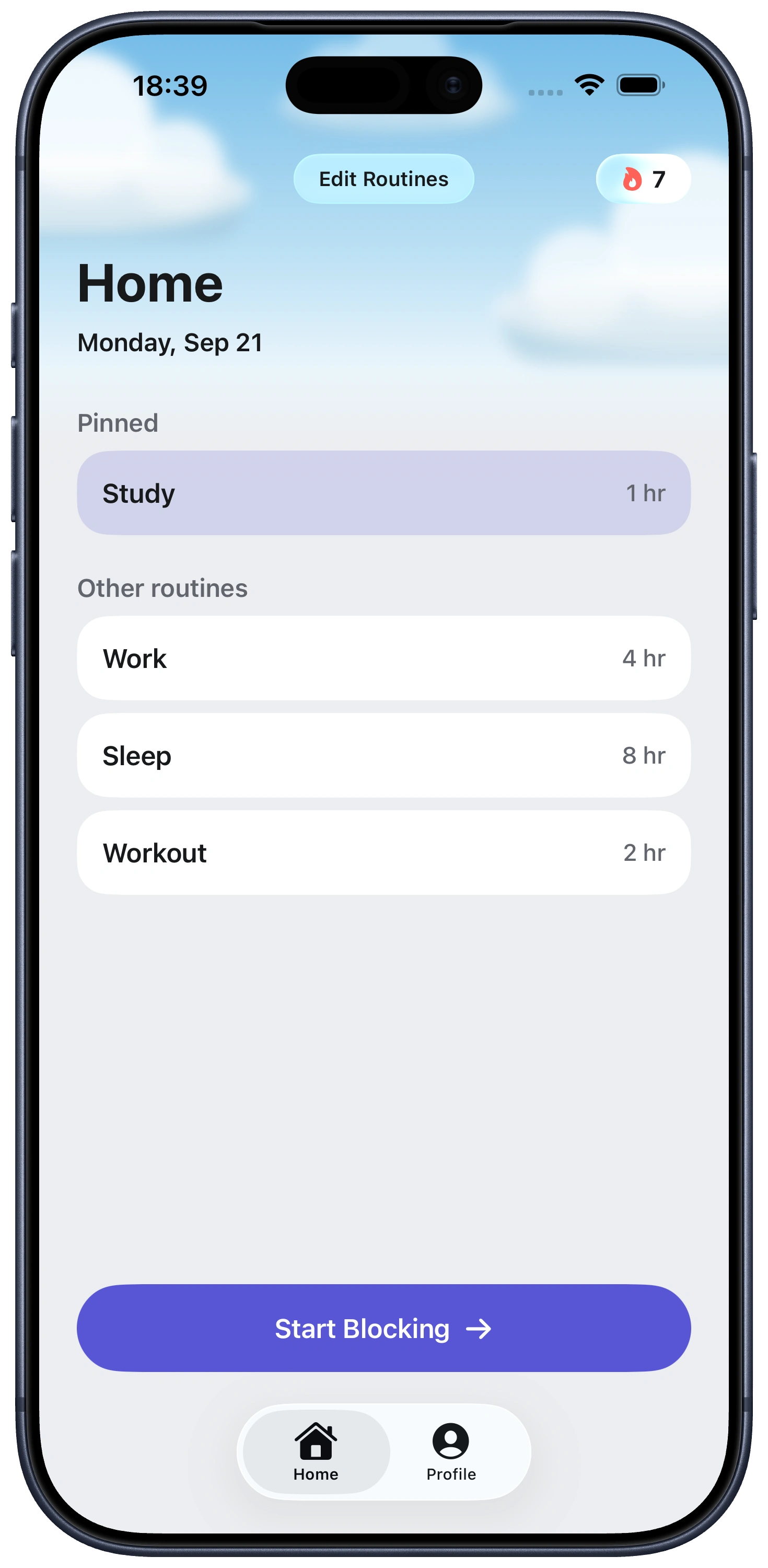
No session to start, no schedule to configure. Pick the apps that pull you away from studying once, and they stay blocked by default every day, including the in-between moments a session-based timer doesn't cover.

Still reachable for anything real. One 5-minute emergency unlock a day covers a genuine need, like replying to a group project message, without leaving a door open for a full scrolling session.

App blocker for students FAQ

Research links heavier phone use to lower GPA, with one study estimating roughly 0.15 GPA points lost per additional hour of daily phone use, and students who avoided phones during class taking about 62 percent more notes.

Yes, widely. As of late 2025, most U.S. states had signed or enacted phone-free school policies, with laws in states including California, New York, Michigan, and Massachusetts taking effect during the 2026 school year.

It depends on the study pattern. Session-based tools like Forest or Cold Turkey fit fixed study blocks well, cross-device tools like Freedom fit studying on both phone and laptop, and default-blocked tools like Fella fit students who want distracting apps blocked all day, not just during set sessions.

A session-based blocker fits studying that happens in defined blocks, like a two-hour library session. An all-day blocker fits students whose phone use bleeds into every part of the day, including exam periods where distraction isn't confined to one sitting.

Research on task switching estimates it takes over 23 minutes on average to fully regain deep focus after an interruption, which is why even a quick notification check can cost far more study time than the check itself.

With Fella, yes. Blocked apps stay locked by default, but you get one 5-minute emergency unlock per day for anything genuinely urgent, and the apps lock themselves again automatically once it ends.

Fella doesn't require starting a session or scheduling study blocks. You pick the apps that distract you once, they stay blocked every day by default, and one 5-minute emergency unlock covers anything urgent without opening the door for a full return to scrolling.