Shopping App Blocker

91% of shoppers now
buy things they didn't plan to.

Modern shopping apps borrow directly from gambling and gaming design, one-click checkout, spin wheels, countdown timers, auction bidding. Fella blocks them by default and gives you one 5-minute unlock a day, so browsing stops being the trap.

Impulse buying isn't a personal failing, it's the intended outcome of how modern shopping apps are built. A 2026 joint report from the National Retail Federation and Shopify found impulse purchase rates have climbed to 91% among active shoppers, with mobile-first buyers 34% more likely to make an unplanned purchase than desktop users. The average consumer now spends an estimated $254 a month on impulse buys, roughly $3,045 a year, and one in five has spent $1,000 or more on a single impulse purchase.

Compulsive buying disorder, the clinical version of this, affects around 5 to 6% of adults, but the design patterns driving ordinary impulse spending are far more widespread than that. One-click checkout, gamified rewards, countdown timers, and auction bidding all show up across the biggest shopping apps, each one engineered by a team optimizing for the same metric: getting you to buy before you second-guess it.

Part 1

Four mechanics, one goal: shorten the decision

Every major shopping app uses some version of the same core trick: compress the time between wanting something and buying it. Amazon does it with 1-Click ordering, shown to lift impulse conversion by roughly 34%. Temu does it with spin wheels and mystery boxes that turn browsing itself into a rewarded behavior. Shein does it with flash sales and a nonstop stream of new arrivals timed to TikTok's haul culture. eBay does it with a countdown clock and competing bidders that shift the goal from "is this worth it" to "can I win."

Different mechanics, same underlying result: less time to think, more purchases you don't fully remember deciding on. Studies on one-step checkout found people recalled their recent spending significantly worse than people who went through multi-step purchases, which is exactly why fewer steps means more repeat impulse buying.

Part 2

Social platforms feed the apps directly

Shopping apps rarely operate in isolation anymore. TikTok's #sheinhaul tag alone has over 8.4 billion views, and research on TikTok-driven shopping found its urgency-heavy, emotionally engaging format measurably weakens people's ability to deliberate before buying. Roughly 68% of Gen Z shoppers say flash sales and limited-time offers directly influence what they buy, a group that spends heavily on both TikTok and the apps its content points to.

A haul video, a recommended product, or a friend's link can all be the entry point, but the shopping app is always the destination. That's what makes blocking the app itself more reliable than trying to avoid every possible trigger that leads there.

Part 3

Why budgeting apps and cooldown tools fall short

Budgeting apps track spending after it happens. Cooldown and wishlist apps add a delay, often 24 hours to two weeks, before you can check out on an item you saved. Both are genuinely useful, and both still leave the shopping app itself fully open. You can browse Amazon's recommendations, spin Temu's wheel, or watch an eBay countdown clock without ever touching the tool meant to slow you down.

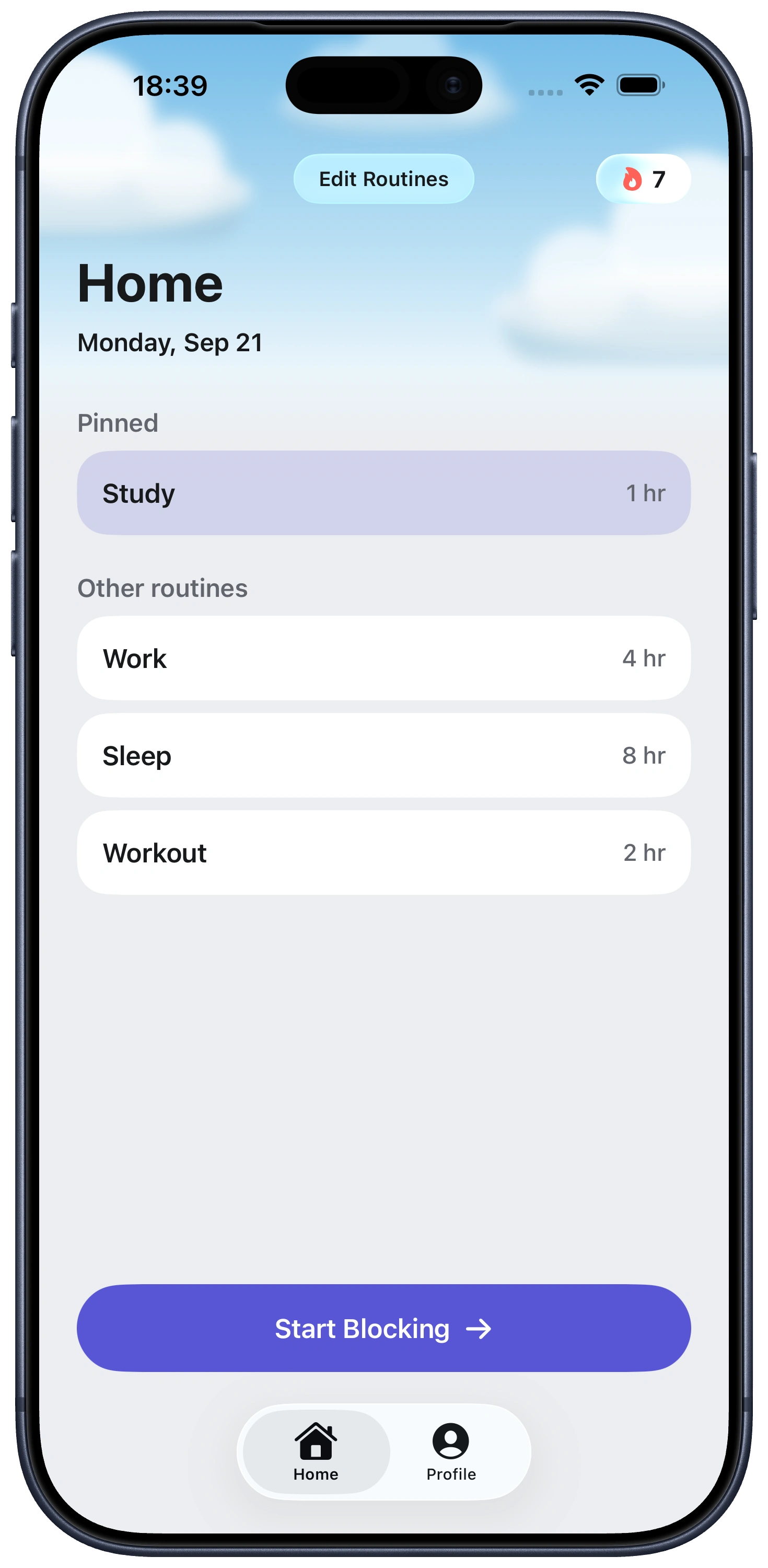
Fella works at the iPhone level instead of inside any single shopping app or a separate tracking tool. Using Apple's Screen Time framework, Fella keeps selected shopping apps blocked by default, so there's nothing to browse in the first place. One emergency 5-minute unlock a day covers a genuine, already-decided purchase, and it locks itself back up automatically when the window ends.

Part 4

Apps people block through Fella

One-click and recommendation-driven apps. Amazon pairs frictionless checkout with a recommendation engine tuned on your entire purchase history.

Gamified marketplaces. Temu builds spin wheels, mystery boxes, and full mini-games into the shopping experience itself.

Fast-fashion and social-commerce apps. Shein runs on constant new arrivals and TikTok haul culture to drive near-daily opens.

Auction and resale apps. eBay introduces competitive bidding, countdown clocks, and the winner's curse into ordinary shopping.

Shopping app blocker FAQ

A shopping app blocker restricts access to apps like Amazon, Temu, Shein, and eBay on your phone, so the app cannot be opened without a deliberate step, instead of relying on willpower or a budgeting app that only tracks spending after the fact.

Cooldown and wishlist apps add a delay before checkout but still let you browse the shopping app freely. Fella blocks the shopping app itself by default at the iPhone level, with one emergency 5-minute unlock per day.

No. Fella blocks the app on your iPhone. It does not close accounts, cancel Prime or other memberships, or touch orders already placed.

Yes. Fella includes one emergency 5-minute unlock per day, enough time for a purchase you already decided on. The app locks again automatically when the window ends.

Apps built around one-click checkout, gamified rewards, flash sales, or auction-style bidding, Amazon, Temu, Shein, and eBay are the most common, but the same reasoning applies to any shopping app you find yourself opening without a specific item in mind.