
Blokkeer apps
zelfs offline
Fella gebruikt de native Schermtijd-regelingen van Apple. Een actieve blokkade is niet afhankelijk van Wi-Fi, mobiele data, VPN of server.
Fella gebruikt de native Schermtijd-regelingen van Apple. Een actieve blokkade is niet afhankelijk van Wi-Fi, mobiele data, VPN of server.

Ja — de kernblokkering van Fella werkt offline zodra de app is ingesteld op de iPhone. Het uitschakelen van wifi of mobiele data verwijdert geen actief schild. Eerder geregistreerde schema's blijven via het Device Activity-systeem van Apple draaien. Handmatige sessies en noodontgrendeling gebruiken lokale Schermtijd-API's en lokale status wanneer het apparaat je betaalde toegang al herkent.
Dat betekent niet dat elk onderdeel van Fella volledig offline is. Kopen of herstellen van een abonnement, verversen van account- of entitlement-informatie wanneer er geen bruikbare cache is, downloaden van updates en leveren van analytics vereisen allemaal een netwerk. Offline blokkeren is een claim over handhaving — niet over facturering, accounts of elke omringende dienst.
| Functie | Werkt offline? | Wat de huidige implementatie doet |
|---|---|---|
| Bestaande actieve app-blokkering | Ja | Managed Settings houdt de geselecteerde apps afgeschermd op het apparaat |
| Wifi of mobiel uitgeschakeld tijdens sessie | Ja | De actieve bron, sessiedata, selectietokens en schildstatus zijn lokaal |
| Nieuwe handmatige sessie | Ja, wanneer al ingesteld en gerechtigd | Fella registreert een lokale Device Activity-timer en past het schild toe; de entitlement moet beschikbaar zijn uit apparaatcache |
| Eerder geconfigureerd schema | Ja | De Device Activity-extensie start en beëindigt geregistreerde schemavensters zonder de servers van Fella aan te roepen |
| Schema maken of wijzigen | Ja, wanneer al ingesteld en gerechtigd | Het schema en de selectie worden lokaal opgeslagen en geregistreerd bij Device Activity |
| Noodontgrendeling | Ja, wanneer in aanmerking | Lokale status heft het schild vijf minuten op; een on-device callback past het opnieuw toe |
| App herstart | Kernblokkeringsstatus: ja | Fella herbouwt zijn blokkeringswaarheid uit lokale App Group-data en past het gewenste schild opnieuw toe; betaalde toegang moet beschikbaar blijven uit cache |
| Abonnementsaankoop | Nee | Apple en RevenueCat moeten de transactie voltooien |
| Herstel aankopen | Nee | RevenueCat en App Store-bondiensten zijn betrokken |
| Nieuwe entitlement of accountsync | Nee | Externe abonnements- of authenticatiestatus heeft verbinding nodig wanneer deze nog niet is gecached |
| Analytics-upload | Nee | Events bereiken PostHog alleen wanneer connectiviteit terugkeert; extensie-tellers worden eerst lokaal opgeslagen |
| App Store-download of update | Nee | De App Store vereist een netwerkverbinding |
Herstart van apparaat wordt niet vermeld als gegarandeerd offline scenario. De bron herbouwt schilden en sessiewaarheid uit gedeelde lokale status wanneer Fella start, en geregistreerde Device Activity-schema's zijn systeembeheerd. Maar er was geen verbonden iPhone beschikbaar voor een herstart-in-vliegtuigmodus-test, dus deze pagina belooft die specifieke volgorde niet.
1. Blokkeringshandhaving gebeurt op de iPhone. Fella vraagt het FamilyControls-systeem van Apple om toestemming, ontvangt privacybehoudende tokens voor de apps of categorieën die je selecteert en geeft die tokens aan Managed Settings. Managed Settings past het systeems child toe.
2. Sessie- en schemastatus wordt lokaal opgeslagen. Handmatige start- en eindtijden, actieve blokkeringsbronnen, routines, geregistreerde activiteitsnamen en noodontgrendelingstiming bevinden zich in de gedeelde App Group van de app. Daardoor kunnen de hoofdapp en extensies het eens worden over de huidige regel zonder een Fella-server te raadplegen.
3. Abonnement-, account- en analyticsdiensten gebruiken het netwerk. RevenueCat handelt producten, aankopen, herstel en entitlement-verversingen af. Authenticatie gebruikt de accountservice van Fella wanneer een account wordt gebruikt. PostHog ontvangt product-analytics. Geen van die diensten is het mechanisme dat een al actief app-schild op het scherm houdt.
De blokkering blijft actief. Het uitschakelen van wifi, uitschakelen van mobiele data of inschakelen van vliegtuigmodus verwijdert het Managed Settings-schild niet. De beperking wordt niet gehandhaafd door continu aan een externe server te vragen of een app mag openen.
De sessie heeft nog steeds een lokale eindtijd. Fella bewaart de handmatige sessiedata en registreert Device Activity-callbacks als systeembackstop. Verlies van verbinding herschrijft die status niet en deactiveert de blokkeringsbron niet.
Vliegtuigmodus is geen internet-uit omzeiling. De huidige architectuur bevat geen netwerkafhankelijkheid in de schild-, schema-monitor- of nood-hervergrendelingspaden. Dit is bewijs op codeniveau en geautomatiseerde tests; het is niet herhaald op een momenteel verbonden fysieke iPhone voor deze pagina.
Ja, met een al geconfigureerde en gerechtigde installatie. Het starten van een handmatige sessie registreert start en einde bij het Device Activity-systeem van Apple, schrijft de data naar gedeelde lokale opslag, markeert de handmatige blokkeringsbron als actief en past het geselecteerde-app-schild toe. Geen van die acties roept een Fella-backend aan.
De abonnementscheck is de grens. Fella controleert betaalde toegang voordat het start. RevenueCat cached klantinformatie op het apparaat en Fella behoudt de laatst bekende actieve status als een verversing mislukt. Als de app geen bruikbare entitlement-cache heeft — zoals vóór een eerste aankoop — kan het geen betaalde toegang offline vaststellen.
App-selectie en Schermtijd-toestemming moeten al beschikbaar zijn. De systeemkiezer en autorisatie horen bij iOS. Deze pagina belooft niet dat eerste setup, aankoop of accountherstel zonder verbinding kan worden voltooid.
Fella registreert routine-schema's bij Device Activity. Wanneer een geregistreerd interval begint, voert iOS de monitor-extensie van Fella uit. De extensie activeert de bijbehorende blokkeringsbron en past het schild toe vanuit gedeelde lokale status. Wanneer het interval eindigt, verwijdert het die bron en verrekent een overlappende blokkering.
De hoofdapp hoeft niet open te zijn. Dat is het nut van het gebruik van een Device Activity-monitor-extensie. De start- en eindcallbacks bevatten geen RevenueCat, PostHog, Supabase, URLSession of andere netwerkclient.
Offline betekent niet immuun voor elke systeemwijziging. Het intrekken van Schermtijd-toestemming, wijzigen van apparaatinstellingen of verwijderen van vereiste autorisatie is een andere kwestie dan het verliezen van internetconnectiviteit. Bekijk hoe de sessies en routines van Fella werken.
De ontgrendeling zelf heeft geen serverantwoord nodig. Wanneer in aanmerking, slaat Fella de vijf-minuten-start en -einde lokaal op, verwijdert tijdelijk het schild en plant een Device Activity-callback voor het einde van het venster. De monitor-extensie past de huidige blokkeringsregel dan opnieuw toe, zelfs als de hoofdapp niet draait.
Betaalde toegang moet nog steeds op het apparaat worden herkend. De app controleert abonnementsstatus voordat noodontgrendeling wordt verleend. Een bestaande gecachte entitlement kan een mislukte verversing overleven; een ontbrekende of eerste entitlement kan niet offline worden aangemaakt.
De hervergrendeling heeft twee lokale paden. De systeemextensie is het achtergrondpad. Als die callback vertraagd is of planning mislukt, verrekent Fella ook de lokaal opgeslagen eindtijd de volgende keer dat de app draait. Lees meer over gedrag van noodontgrendeling.
Fella leidt app-verkeer niet via een VPN of proxy. Zijn taak is het beperken van toegang tot geselecteerde iPhone-apps via de Schermtijd-frameworks van Apple. Daarom hangt het app-schild niet af van een actieve dataverbinding of een externe filterserver.
Netwerkfilters lossen een ander probleem op. VPN- of DNS-gebaseerde tools zijn vaak ontworpen om websites en netwerkverzoeken te filteren. Sommige kunnen ook nuttig offline gedrag behouden. Fella beweert niet dat elke VPN-blokker faalt zonder internet; het legt uit dat het eigen app-blokkeringspad van Fella er geen gebruikt.
Offline app-blokkering is geen offline webfiltering. Fella blokkeert geselecteerde apps. Het claimt niet elke website, verbinding of stuk internetcontent te blokkeren terwijl offline. De toegewijde geen-VPN-pagina zal de bredere handhavingsmethode-vergelijking behandelen wanneer die pagina wordt gepubliceerd.
Je native selectie van geblokkeerde apps wordt vertegenwoordigd door de ondoorzichtige Schermtijd-tokens van Apple. Fella slaat die tokens op in de lokale App Group die door de app en blokkeringsextensies wordt gebruikt. De tokens uit de kiezer van Apple worden niet als analytics-eigenschappen verzonden.
Fella is geen volledig offline applicatie. De productie-app gebruikt RevenueCat voor abonnementen, optionele accountservices voor authenticatie en ondersteunde synchronisatie, PostHog voor product-analytics en Sentry voor diagnostiek. Die diensten kunnen hun gedocumenteerde data verzenden wanneer een verbinding beschikbaar is.
Lees de volledige grenzen voordat je beslist. Bekijk het privacybeleid voor de volledige data-inventaris en Fella's privacyfilosofie voor een begrijpelijke uitleg van on-device blokkering.
Je internetverbinding zou niet moeten bepalen of de blokkering actief blijft. De kernregel van Fella wordt door iOS op de telefoon toegepast, dus een treintunnel, dood gebied, uitgeschakeld databundel of bewuste switch naar vliegtuigmodus verwijdert geen reeds actief app-schild.
Fella past wanneer app-toegang het probleem is. Het is geen VPN, websitefilter of externe monitoringdienst. Het is een iPhone-app-blokker gebouwd rond lokale beperkingen voor geselecteerde apps, handmatige sessies, geplande routines en gecontroleerde noodtoegang.
Je startscherm laat in één oogopslag zien wat vergrendeld is en wat nog open staat, zonder in Instellingen te graven.
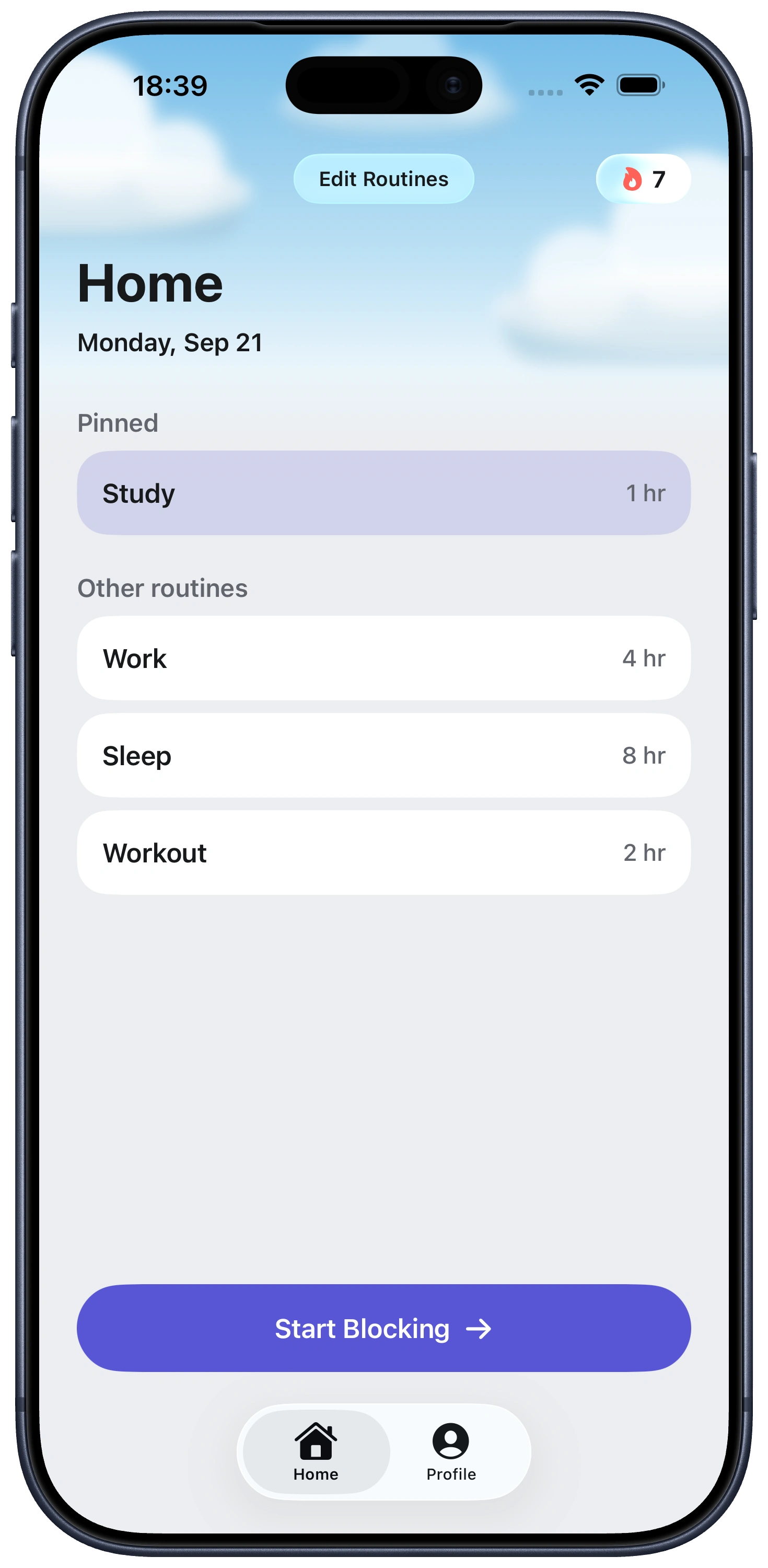
Ja. Nadat Fella is ingesteld en betaalde toegang beschikbaar is op het apparaat, hebben de kernregels voor app-blokkering geen wifi nodig. Actieve schilden, geregistreerde schema's, sessietiming en noodontgrendelingsstatus worden via de Schermtijd-frameworks en lokale opslag van Apple afgehandeld.
Ja. Het uitschakelen van mobiele data verwijdert geen actief Fella-app-schild en stopt geen eerder geregistreerd schema. Abonnementsaankopen, herstel, accountsynchronisatie en analytics-levering hebben nog steeds een verbinding nodig.
Vliegtuigmodus verwijdert de lokaal toegepaste Schermtijd-beperkingen van Fella niet. Deze conclusie is geverifieerd op basis van de on-device-architectuur en geautomatiseerde tests van Fella, niet via een test op een echt apparaat in vliegtuigmodus.
De kernblokkering van Fella niet. Apple Managed Settings past het app-schild toe op het apparaat, terwijl Device Activity geregistreerde sessie- en schemacallbacks uitvoert. Internettoegang wordt nog steeds gebruikt door omringende diensten zoals facturering, accountsynchronisatie en analytics.
Nee. Fella past app-beperkingen toe via de FamilyControls-, ManagedSettings- en DeviceActivity-frameworks van Apple in plaats van verkeer via een Fella-VPN te leiden.
Eerder geregistreerde schema's worden gestart en beëindigd door de Device Activity-systeemextensie van Apple op de iPhone. De extensie leest lokaal bewaarde schema- en app-selectiestatus en bevat geen netwerkclient.
Ja, voor een actieve lokale blokkeersessie wanneer het apparaat betaalde toegang al herkent. Fella slaat het venster van vijf minuten lokaal op en registreert een on-device callback om de blokkering opnieuw toe te passen.
Ja, op een al ingestelde installatie wanneer Schermtijd-toestemming, app-selectie en betaalde entitlement lokaal beschikbaar zijn. Een eerste aankoop of ontbrekende entitlement-cache vereist nog steeds internet.
RevenueCat handelt abonnementsproducten, aankopen, herstel en entitlement-verversingen af. Die bewerkingen kunnen internet vereisen. Fella behoudt de laatst bekende abonnementsstatus wanneer een verversing mislukt, maar een eerste aankoop of ontbrekende cache kan niet offline worden voltooid.
De native Schermtijd-kiezer retourneert privacybehoudende tokens. Fella slaat ze op in de lokale App Group voor de app en blokkeringsextensies en verzendt die tokens niet als analytics-eigenschappen.